
What is Robotics Lab for Schools?
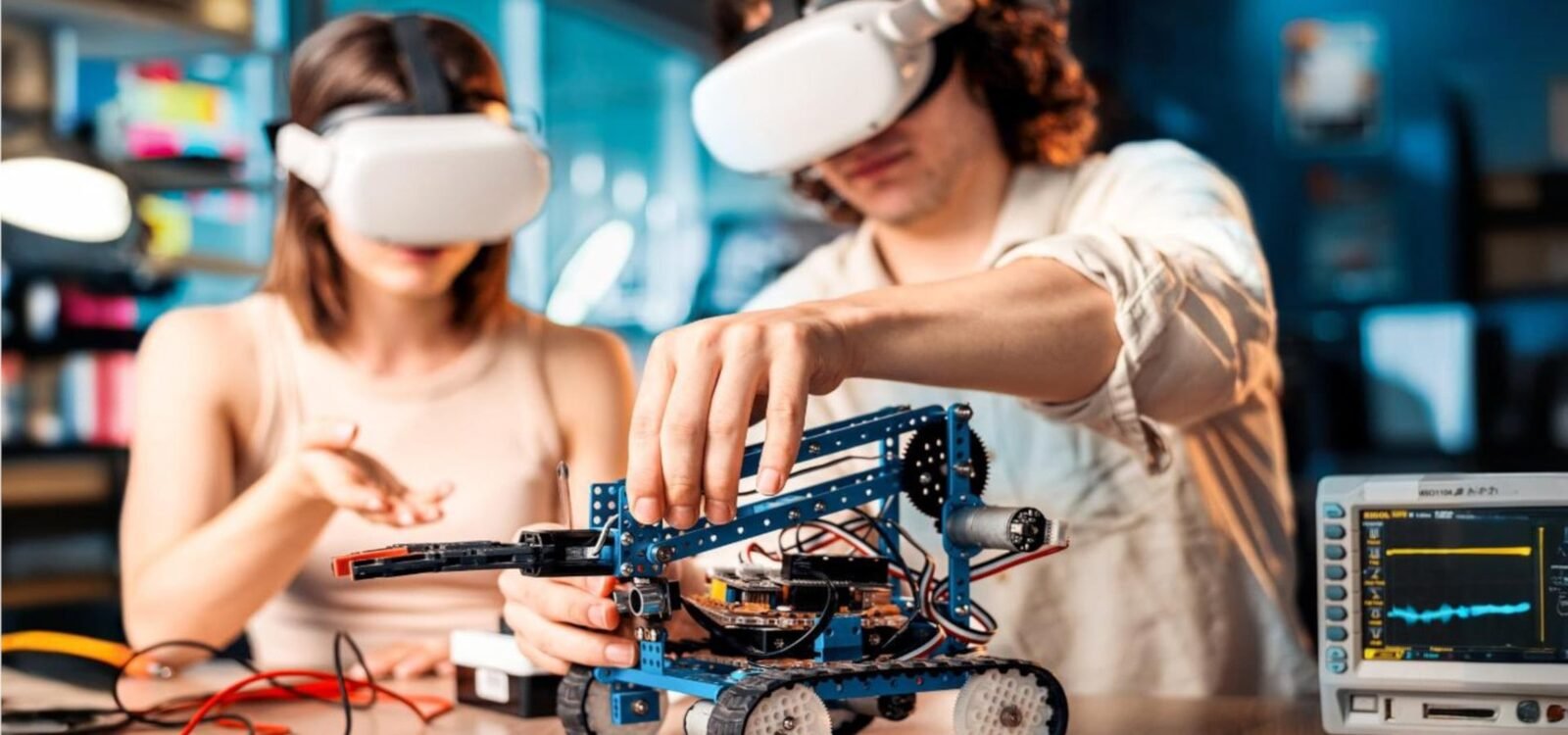
A Robotics Lab for Schools is a special classroom area where students use basic equipment, robot kits, and simple courses to design, construct, and program their own robots. Instead of depending only on textbook reading, it uses practical exercises to teach students robotics, artificial intelligence (AI), and coding. Robotics labs prepare students for future jobs in technology while fostering their creativity, problem-solving abilities, and cooperation. With age-appropriate kits and expert-led instruction for children of all ability levels, companies such as Techradiance help schools set up these labs.
Why Do Schools Need a Robotics Lab?
Schools should have a Robotics Lab because they help students learn by doing and not only by reading books. When children design and operate robots, learning is fun and thrilling.
In a robotics laboratory, the students study maths, science, and computer science in an easy way. They work as groups, exchange ideas, and comprehend the ways machines work. This allows them to think more clearly and be able to solve problems more quickly.
The Robotics Lab also prepares children for their future. Nowadays, technology and robots are all around us. In school, learning robotics can help students feel confident and prepare for the future.
Benefits of a Robotics Lab for Schools
| 1. A Robotics Lab helps students learn in a practical and fun method. Instead of reading only from books, they create robots and observe how things operate in real-world situations. |
| 2. It improves problem-solving and thinking abilities. If students correct their mistakes and make a second attempt, they are taught to think step-by-step and discover solutions by themselves. |
| 3. The Robotics Lab also encourages teamwork. Students collaborate, exchange ideas and learn to assist each other in making projects. |
| 4. It prepares students for their future. Robotics is a great way to teach important skills such as creative thinking, coding and knowledge of technology, which will be valuable in the future world. |
| 5. In the end, the Robotics Lab makes learning exciting. Students grow better prepared, more curious and intrigued by the field of science and technology. |
How much does a robotics kit cost?
Depending on the age range and ability level, a robotics kit costs between ₹2,000 and ₹20,000.
— Simple kits with simple, snap-together parts for younger kids (ages 8–10) cost between ₹2,000 and ₹5,000.
— Kits with basic coding and sensors for middle school children (ages 10–13) cost between ₹3,000 and ₹8,000.
— High school students (ages 13–16) can purchase kits with additional sensors and coding tools for ₹4,000–₹12,000.
— Students (ages 16–18) can purchase advanced kits with additional capabilities, including IoT for ₹6,000–₹20,000.
The cost may vary depending on what is included, such as motors, sensors, and the number of courses. To help every student learn step-by-step, Techradiance offers affordable robotics kit packages for every age group and budget, in addition to simple courses and assistance.
How do I set up a robotics lab in my school?
1. Establish your objectives — Choose the grades and subjects that the lab will support, such as STEM, AI, or coding.
2. Choose the right space — Select a classroom or special area that has adequate room for workstations, storage, and group activities.
3. Choose age-appropriate robot kits — From beginner to advanced, pick kits and tools that correspond to your students’ age group and skill level.
4. Establish the curriculum — From simple robotics to complex projects, use an organized, simple-to-follow curriculum that develops abilities gradually.
5. Train your teachers — Teachers should receive practical training so they can confidently lead students through solving problems.
6. Partner with an expert provider — Organizations such as Techradiance assist educational institutions in setting up full robotics labs, complete with kits, curriculum, and teacher training, making the process easy and hassle-free.


Skills in Demand

Thinking

and Ideation


We Are Offering STEM Education Solutions
Our programs are made to give kids the Best STEM Education possible by giving them the fundamental knowledge and abilities in math, science, technology, and engineering. We help in establishing a cutting-edge Robotics lab for Schools through a practical approach that promotes innovation, creativity, and problem-solving. Our curriculum incorporates interactive learning resources to guarantee that students acquire real-world experience that prepares them for upcoming technological developments.
HARDWARE
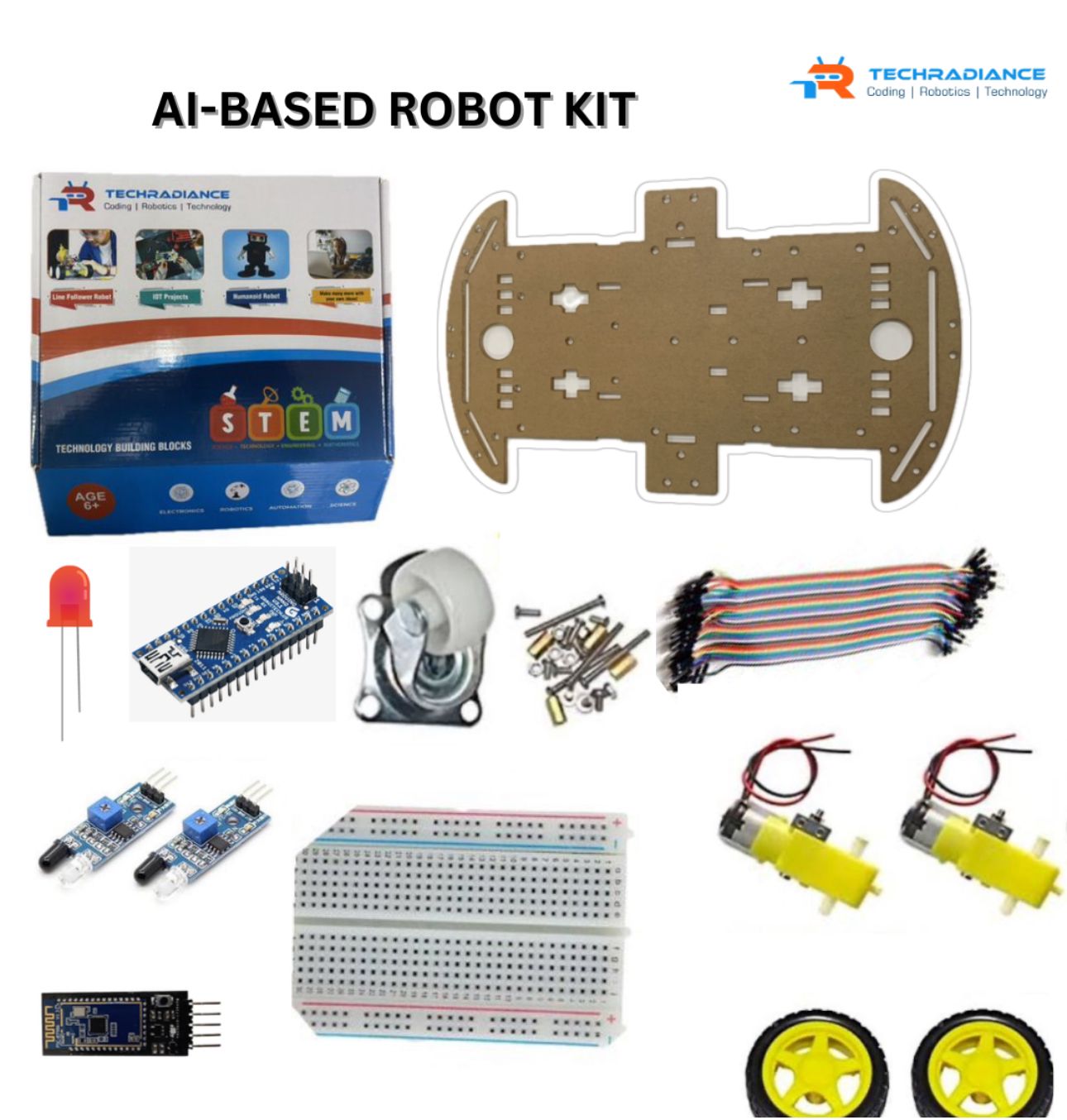
> Sensor Interfacing Feature
> 100+ AI-ML, IoT real-life projects
> Project Based Learning

SOFTWARE
> LMS for every participant
> Open source coding platforms
> Activity-based customized curriculum

TRAINING
> Online, Offline Training
> Teachers Training by TRAINERS
> Online support for students.
Implementation Plan for Robotics Lab for Schools
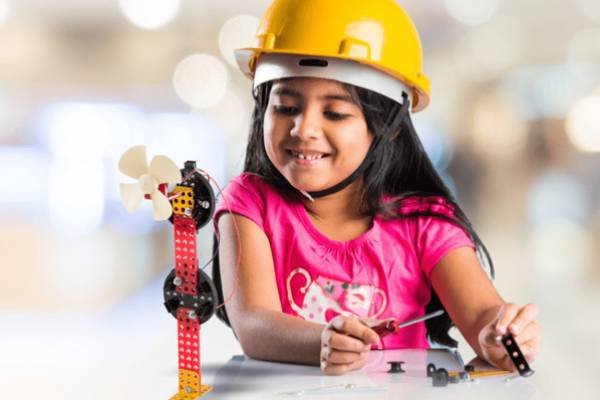
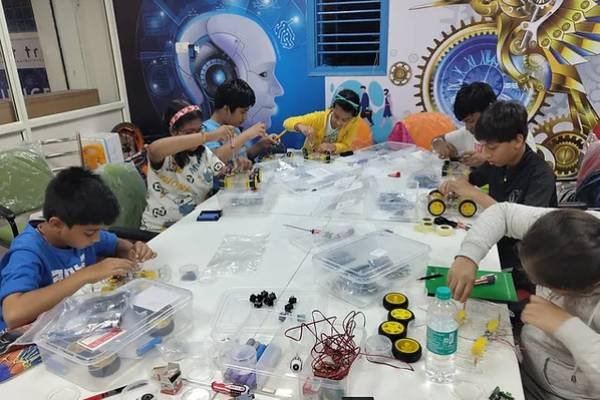
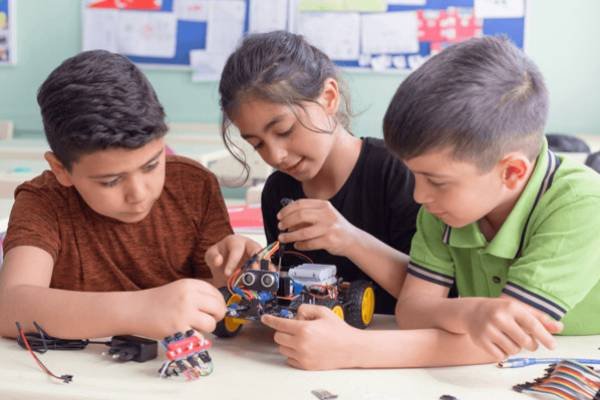
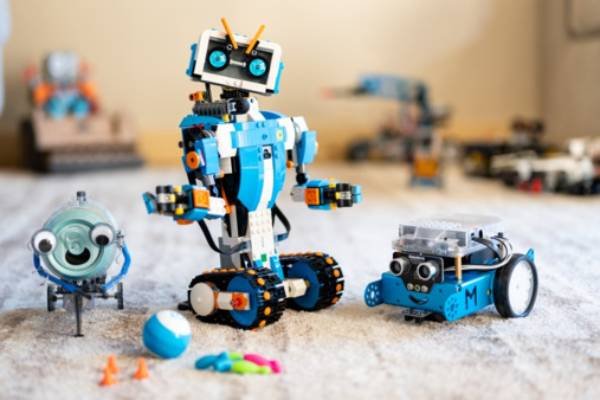




Explore Our Robotics Lab For Schools
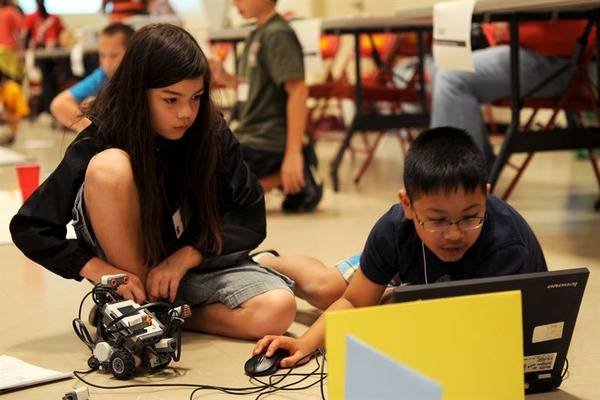
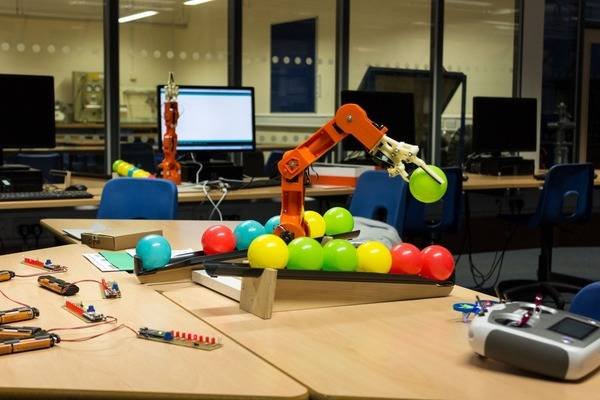
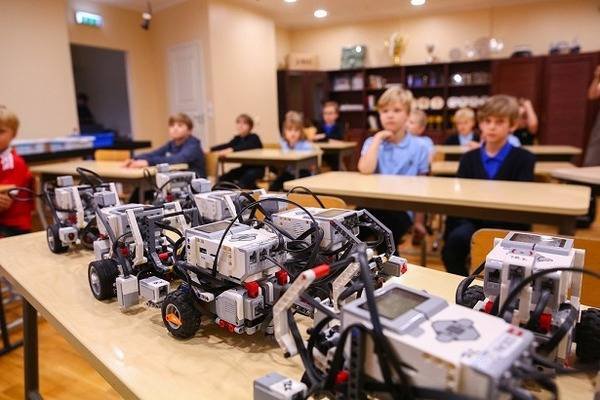
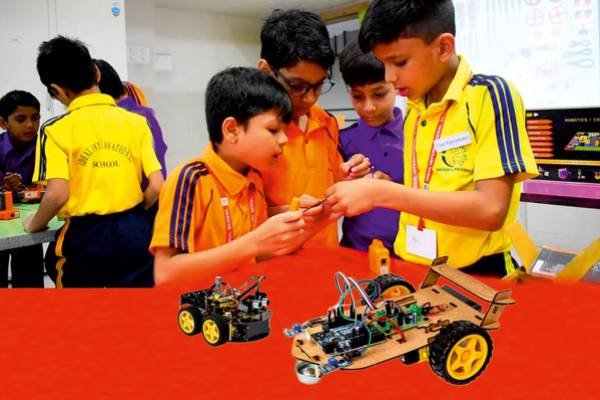
Students can explore science and technology in an enjoyable and practical way with the help of our Robotics Lab for Schools. Kids may build, develop, and observe how real machines work with the help of smart robots and AI tools.
Key Features:
1. Arduino Projects: Discover how tiny computers control robots.
2. Line Follower & Obstacle Avoider Robots: Build autonomous robots.
3. Voice & App Controlled Robots: Use your phone or voice to control your robot.
4. Computer Vision Integration: Help robots in recognizing and understanding their surroundings.
Visit our blog to learn about the Robotics Project ideas

WorkShops & Trainings
The workshop is also of prime importance when you want to gather the practical knowledge
STEM, Robotics, Skill & D&T Lab Setup
Design & Technology (D&T) is crucial in schools for fostering creativity and innovation, allowing students to express unique solutions to real-world problems.
Trainer On Demand
With Trainers On-Demand, schools can benefit from targeted support that adapts to their schedule and specific challenges.
Teacher Training & Curriculum
Comprehensive Training Programs for Your School Teachers in Design Technology, Robotics, EV, AR-VR, CNC and More.
STEM Kits
Robotics and STEAM (Science, Technology, Engineering, Arts, and Mathematics) education are essential for students for the future.
National Championship
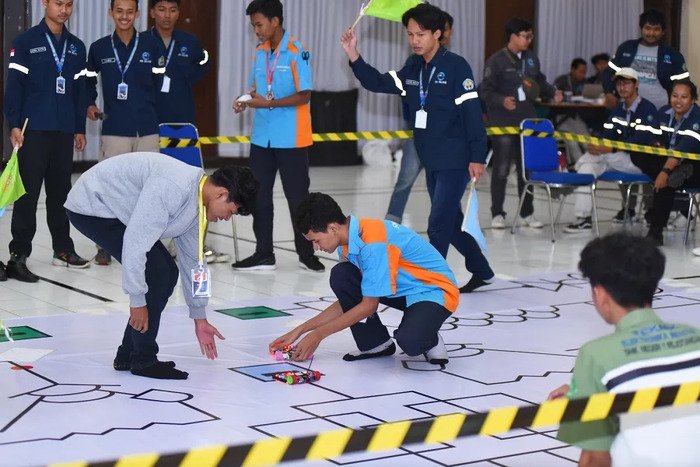
Techradiance offers students a premier platform to showcase their skills in national-level competitions across cutting-edge technologies
Coding & Robotics Classes
Our Robotics & AI lab is customised and includes the equipment with latest technologies to give students the best learning platform.
Frequently Asked Questions

1. What is a Robotics Lab for Schools?
A robotics lab is a space dedicated to teaching robotics, programming, and engineering by doing.
2. How to set up a Robotics Lab in schools?
Set up a robotics lab in schools by choosing a safe space, adding basic furniture, providing robotics kits and computers, installing simple coding software, ensuring safety measures, and guiding students step-by-step.
3. What are the key components of a Robotics Lab?
This includes robots, coding software, and sensors, as well as computers, a structured curriculum, and robotics kits.
4. How to choose the Best Robotics Kits for Schools?
Look for a programmable kit with modular components and age-appropriate materials that encourage hands-on learning.
5. How does a Robotics Lab support STEM Education?
Through interactive learning, it integrates math, science, technology, engineering, and other subjects.
6. What are the 5 major primary areas of Robotics?
Mechanical engineering, electrical engineering, computer science, control systems, and artificial intelligence (AI) are the 5 primary areas of robotics. Together, these fields allow robots to move, think, and carry out tasks efficiently.
What schools say about our robotics lab
Feedback from schools that have set up a Robotics-AI, STEM Lab with Techradiance.
Setting up the robotics lab with Techradiance was smooth from day one. Our students are now building and coding their own robots with real confidence.
Abhishek
Riyan International School
The structured rollout made all the difference, from lab setup to teacher training to ongoing support.
Rohan
G.D Goenka Public School
Our students went from zero robotics exposure to building sensor-based robots within a term.
Kiyaan
Summer Field International School
I felt fully prepared before ever stepping into a robotics class. The kids now look forward to it every week.
Vaishali
MK Bagrodia School
Students aren’t just reading about technology anymore, they’re building and programming it themselves.
Sakshi
Dwarka International School
From planning to installation to training, the entire process was well-organized and easy to follow.
Kashish
Red Roses Public School
Plan your school’s robotics lab
Robotics lab setup curated to your budget — kits, furniture, training and curriculum. Trusted by 800+ schools and 2,00,000+ students.