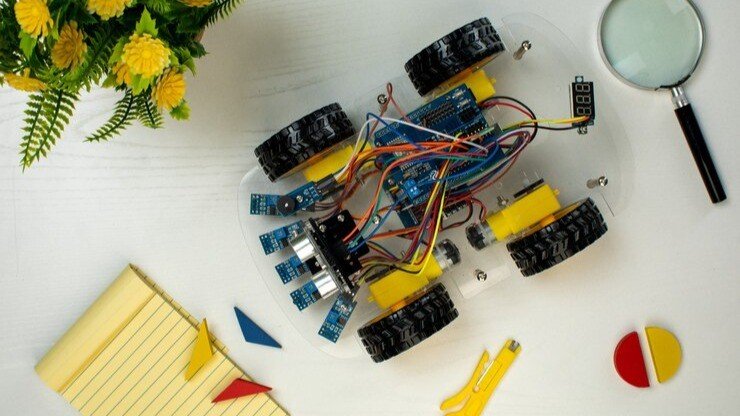
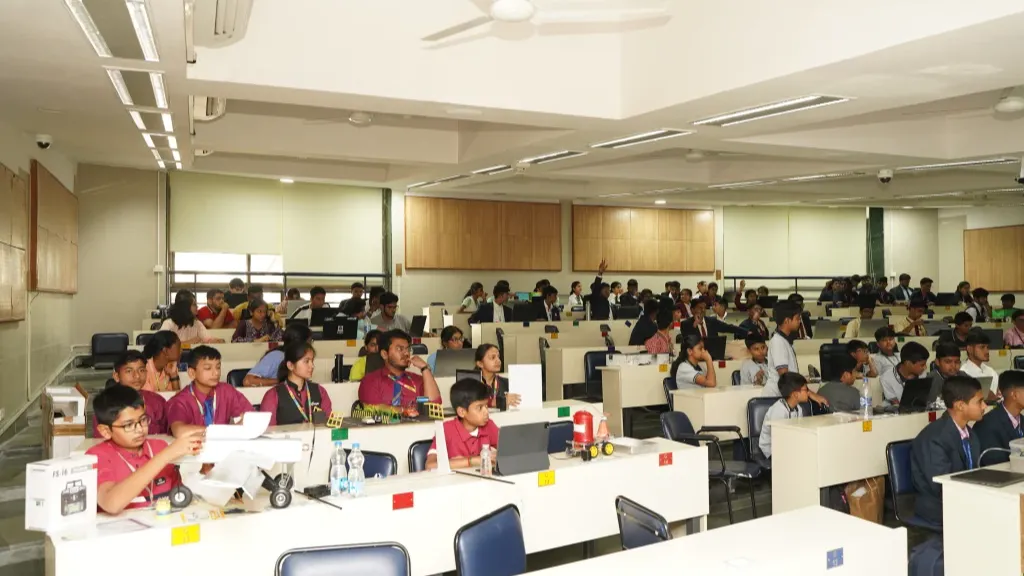
DD Roboconis a thrilling robotics competition that lets kids build robots and let them do enjoyable tasks.It’s a fantastic way to discover how machines operate in a straightforward and fascinating method.ForDD Robocon 2026,it will take place on the 4th and 5th of April, when a variety of teams will get together to showcase their innovative robotic concepts.With the aid of the help ofTechradiance,students can quickly learn about robotics and be prepared for this exciting event.This event is not just about making learning enjoyable but also makes students think of new ways to tackle problems as engineers do.
Author: Ashish Rajput
What is DD Robocon?
DD Roboconis an extremely popular robotics contest where college students create and build robots that can complete specific tasks.The tasks are built around each year’s theme, which makes the contest enjoyable and difficult.
In short, it is a platform that lets students apply science, technology, and creativity to create smart robots and compete against other teams.It helps students master real-world abilities like solving problems, teamwork, and creativity.
The contest is telecast on Doordarshan (DD), and that is the reason it’s calledDD Robocon.It is among the most prestigious robotics competitions for students from India and provides them with the chance to showcase their skills at both a local and an international scale.
Robotics Competition 2026 Date and Schedule
It is expected that theRobotics Competitionin 2026 will take place on the4th and 5th of April 2026at IIT Delhi.In these two days, several student teams will gather together to showcase their robots and then complete tasks.Each team will be given the chance to operate their own robot and carry out tasks that are based on the theme of competition.With the assistance provided byTechradiance,students will be able to prepare and comprehend the process of competition in a way that is easy to understand.It’s an event that students will learn, have fun, and display their creative talents.
Benefits of Participating in DD Robocon
Learn new skills:You learn how to build robots and also straightforwardly understand technology.
Collaboration:Teamwork is when you work together and are taught how to work together.
Enhance Creativity:You come up with innovative ways to improve your robot.
Enhance Confidence:You feel confident when you present your work to other people.
Why the Robotics Championship is Important for Students
ARobotics Championshipis important for students as it allows them to learn in a practical and fun manner.Instead of just studying books, students are able to construct and utilise robots. This makes learning more exciting.Also, it improves their problem-solving abilities, as they are taught to think about and come up with solutions.When they design and demonstrate their robotic creations, they are happier and more proud of their accomplishments.It also prepares students for their future through teaching valuable tech techniques.
Real Life Testimonials
Rohit Sharma (Student) “DD Robocon helped me learn how to construct robots in a fun and enjoyable way.I’m more confident now.”
Priya Singh (Student) “I loved working with my team and coming up with something completely new.It was a wonderful experience!”
Aman Verma (Student) “Thanks to Techradiance, i was able to grasp robotics quickly and performed very well in the contest.”
Neha Gupta (Student) “This competition made learning exciting.I learned a lot of new things and also had fun.
Final Thoughts :
DD Robocon 2026offers a fantastic opportunity for students to study, to explore, to experiment, and to be awed by the realm of robotics.It’s not only a contest but also a great opportunity to learn skills like collaboration, creativity and solving problems.With the guidance ofTechradiance,students can prepare effortlessly and participate confidently.In a nutshell, the event will help students develop, discover new things, and be prepared for a bright future in the field of technology.
Coding for schools: As parents, wewant to help educate our kids for the challenges of the future. While writing, reading, and arithmetic are important, there’s a brand new skill rising to the very top: Coding. In our technologically-driven society, learning to code is more important than knowing what to read. What exactly is coding, and why should every child be taught it? Coding will not only improve your problem-solving skills but also enhance your ability to think logically and creatively. It assists children in developing a mindset of growth by encouraging them with failure, then trying to do it again. Technology is the new norm. Coding is a skill that opens up endless career possibilities.
What is Coding?
At its core, coding is the process of giving instructions to a computer so that it can perform a task. It’s the language that machines understand, and it powers everything from the apps we use on our phones to the websites we browse, and even the algorithms that recommend our next favorite show on Netflix.
For children, learning to code is like learning a new language. But instead of communicating with people, they’re communicating with technology. With coding for schools, kids learn how to create games, build websites, and even develop their own apps. This creative process not only teaches problem-solving but also fosters innovation and critical thinking.
Why Coding for Schools is Important to Learn for Kids
Coding for schools is crucial because it teaches children problem-solving abilities, logical thinking, and creative thinking. Coding from an early age helps prepare students for careers in the field of technology and innovation. Schools that incorporate the subject into their curriculum help kids acquire valuable digital skills that are relevant to the current world.
1. Coding is the Future: Technology is rapidly advancing, and coding is at the heart of this transformation. Almost every industry, from medicine to entertainment, is now intertwined with technology. By 2030, many jobs that don’t exist today will likely be related to coding for schools or technology. Children who learn coding will have an advantage in navigating this digital landscape, giving them a head start in careers that are yet to be invented.
2. It Develops Problem-Solving Skills: Coding teaches kids how to approach problems in a structured way. When coding, they must break down a task into smaller, manageable pieces and work step by step to solve it. This logical thinking is not just limited to computers—it’s a skill that can be applied in everyday life. Whether they’re facing a math problem, figuring out a science experiment, or even resolving a personal conflict, the problem-solving skills they develop from coding will help them succeed.
3. Coding Enhances Creativity: Coding is more than just a technical skill—it’s a creative outlet. Kids can learn coding to create their games, build digital stories, or design websites. Coding for schools allows them to turn their ideas into something tangible. By experimenting with different solutions and testing their ideas, they discover that mistakes are part of the creative process, fostering a growth mindset that encourages learning through trial and error.
4. Coding Encourages Collaboration:
While coding might seem like a solitary activity, it often involves teamwork. Many coding projects, especially those in Coding for Schools programs, require collaboration. Kids work together to solve problems, exchange ideas, and build projects. This teamwork fosters communication skills and teaches kids the value of working together to achieve a common goal.
5. It Builds Resilience: Coding often involves a lot of trial and error. Programs rarely work perfectly on the first try. Children who join the bestcoding classes in India and learn to code quickly understand that failure is not the end but a stepping stone to success. Each bug they encounter or error they fix teaches them resilience and perseverance. These are life skills that go far beyond the computer screen.
Common Myths About Coding for Schools
Some parents hesitate to introduce their children to coding because of common misconceptions. Let’s address a few:
“My child isn’t tech-savvy.”
Coding is for everyone, not just tech-savvy kids. There are coding platforms designed specifically for beginners, making it accessible for all children, even those who may not naturally gravitate toward technology.
“Coding is only for boys.”
This couldn’t be further from the truth. Coding for schools is gender-neutral, and many programs actively encourage girls to get involved. Some of the biggest names in tech—like Ada Lovelace, Grace Hopper, and Margaret Hamilton—have been women.
“It’s too difficult for my child’s age.”
Even a five-year-old can learn coding. Platforms like Scratch introduce kids to the basics of coding through fun, interactive projects. As they progress, they can move on to more advanced languages like Python. The beauty of coding is that it’s adaptable to a child’s age and ability. Coding for Schools makes it easier to equip children with these essential skills for their future
How Can Parents Get Involved?
1. Start with Fun Platforms
Platforms like ours, Techradiance, offer fun coding programs designed for children. These platforms use visual blocks to teach the basics of coding, making it fun and engaging.
2. Join Coding Camps or Classes
If your child shows interest in coding, consider enrolling them in a coding camp or class. These environments provide structure and support, ensuring your child stays motivated and continues learning. Look for Python language courses & learn coding at Techradiance, which offers courses tailored to kids’ learning levels.
3. Encourage Exploration
Give your child the freedom to explore coding at their own pace. Let them experiment with different coding projects. Whether it’s creating their own video game or designing a website, encourage their curiosity and celebrate their successes. Look for the bestcoding classes in India!
4. Learn Together
You don’t need to be a coding expert to support your child. Learn coding together can be a fun family activity. There are plenty of beginner-friendly resources that can help parents understand the basics of coding. By showing interest in what they’re learning, you can help nurture their passion and enthusiasm for coding.
Conclusion
The world is changing, and coding is becoming an essential skill for the future. Coding for Schools is not just about preparing kids for tech jobs—it’s about equipping them with the tools to thrive in an increasingly digital world. Learning coding fosters creativity, problem-solving, and resilience—skills that benefit children no matter their path. So, parents, let’s encourage our children to learn coding today and unlock a future full of endless possibilities.
Coding can help children develop the ability to solve problems along with logical thinking and creative thinking. It also helps prepare children for a career in the field of technology. Techradiance is a place where kids can learn to code. Techradiance, our coding classes for kids, help make learning enjoyable.
2. At what age should kids start learning coding?
At as age of 5 can begin learning the basics of coding using the use of visual programming languages, such as Scratch. Our coding school for kids offers classes for beginning and advanced students.
3. What are the benefits of coding for schools?
Coding at the age of 5 helps develop the math skills of children, increases the ability to think creatively, and increases confidence. Schools that incorporate coding for school allow students to gain an edge in their academics and job opportunities.
4. How can schools introduce coding to students?
Schools can introduce coding to students through after-school programs and interactive learning applications or through partnerships with experts such as Techradiance, which provides school coding solutions that are specifically designed for various age classes.
5. Why choose Techradiance for coding for schools?
Techradiance offers hands-on, expert-led programming courses for children of all age groups. The courses we offer are designed to make learning about coding exciting, fun, and efficient.
Composite Skill Labs in CBSE Schools: A strong focus on academic excellence alone is no longer sufficient to prepare students for the challenges of the future. Schools are realizing the importance of imparting composite skills that go beyond traditional textbook learning. These skills include creativity, critical thinking, collaboration, problem-solving, and communication — all of which are essential for students’ personal and professional growth. One effective way to cultivate these skills in students is by setting up a Composite Skill Lab in CBSE Schools.
A composite skill lab serves as an interdisciplinary space where students can work on projects that combine knowledge from various subjects, fostering practical skills in a real-world context. This blog will guide you through the process of setting up a composite skill lab in a CBSE school, explaining its benefits, essential components, and the steps involved.
What is Composite Skill Lab?
TheComposite Skill Lab, developed by Techradiance, is a location where students are able to learn various abilities in a fun and practical manner. It helps them develop the ability to work in teams, problem-solving, and technical expertise through hands-on tasks. Instead of reading a book, students can experiment and learn through actual tasks. This makes learning fun and exciting, allowing them to prepare for the future. Techradiance designed the lab to help make education enjoyable and beneficial for everyone!
Why Set Up a Composite Skill Lab?
The composite skill lab concept aligns with the National Education Policy (NEP) 2020, which emphasizes a more holistic approach to education. It aims to equip students with the skills required to thrive in an ever-changing world. A composite skill lab offers several advantages:
1. Enhanced Problem-Solving: By working on cross-disciplinary projects, students learn to approach problems from multiple perspectives, improving their problem-solving skills.
2. Collaboration: In today’s globalized world, teamwork and communication are essential. A composite skill lab encourages students to collaborate with their peers, preparing them for future workplaces.
3. Creativity and Innovation: Combining knowledge from different fields fosters creativity. Students get to experiment, innovate, and come up with original solutions to real-world problems.
4. Hands-on Learning: A composite skill lab emphasizes practical learning through hands-on activities. This makes the learning process more engaging and ensures better retention of knowledge.
5. Holistic Development: Beyond academics, the lab helps in the development of soft skills, critical thinking, and emotional intelligence, which are crucial for students’ overall growth.
Essential Components of a Composite Skill Lab
To create an effective Setup composite skill lab, certain elements need to be carefully planned and executed. Here’s a look at the key components of a successful composite skill lab:
1. Infrastructure and Space
The first step in setting up a composite skill lab is selecting an appropriate space. It should be large enough to accommodate different activity zones for students to engage in various types of learning experiences. The lab should be flexible, modular, and adaptable to different projects. Ideally, it should have:
· Workstations for group work and individual projects.
· Storage areas for equipment and materials.
· Interactive whiteboards or digital screens for presentations and brainstorming sessions.
· Collaborative spaces to promote team activities.
2. Technology Integration
Technology plays a central role in the composite skill lab. Integration of technology tools such as computers, tablets, coding kits, and robotics equipment enables students to engage with modern technologies. Some useful technologies to include are:
· Computers with coding software for programming and software development.
· Robotics kits to encourage students to build and program robots.
· 3D printers for creating prototypes and models.
· Augmented Reality (AR) tools or Virtual Reality (VR) tools for better learning experiences.
· Online collaboration tools for project management and team communication.
3. Tools and Equipment for Hands-On Learning
The next step is to equip the lab with tools and resources that facilitate practical learning. These tools will depend on the specific skills you want to teach. Here are some examples:
· Art and Craft Supplies for creativity and design thinking.
· Scientific instruments for conducting experiments in physics, chemistry, and biology.
· Math Manipulatives for exploring mathematical concepts.
· Geography tools like globes, maps, and digital simulation software for spatial learning.
· Engineering kits that allow students to build structures, mechanisms, and gadgets.
4. Curriculum and Lesson Plans
The curriculum for a composite skill lab should be project-based and interdisciplinary. It should include activities that combine knowledge from various subjects and promote collaboration. Some key themes that can be included are:
· STEM (Science, Technology, Engineering, and Mathematics) projects, such as building models of renewable energy systems or programming microcontrollers.
· Social Science and Geography projects, like designing eco-friendly urban spaces or simulating natural disasters.
· Arts and Crafts activities to foster creativity and design thinking.
· Entrepreneurship and Leadership activities, where students can create business plans or start mock enterprises.
Teachers should be trained in interdisciplinary teaching methods to ensure that the projects integrate skills from multiple subjects seamlessly. Schools can also invite professionals from various fields to share real-world experiences and mentor students.
5. Assessment and Feedback Mechanisms
Since a composite skill lab focuses on practical learning and skill development, assessment should be focused on the process and outcomes of the projects, rather than just theoretical exams. Teachers can use a combination of formative and summative assessments, including Composite Skill Labs in CBSE Schools.
· Project-based assessments, where students present their work and explain their learning process.
· Peer reviews to encourage collaborative learning and critical thinking.
· Self-assessments, where students reflect on their skills and improvements over time.
· Feedback from industry professionals to provide insights into real-world applications.
Steps to Set Up a Composite Skill Lab in CBSE Schools
Step 1: Planning and Budgeting
The first step is to identify the objectives of the lab and create a detailed plan. This includes determining the budget, designing the layout, and selecting the right tools and technologies. Collaborating with teachers, administrators, and industry experts will help in making informed decisions. The budget should be allocated for infrastructure, equipment, technology, and resources for a year or more. A “course on python programming” can be an integral part of this initiative, equipping students with essential programming skills. Composite Skill Labs in CBSE Schools play a crucial role in this process.
Step 2: Selecting the Right Space
Choose a space that is easily accessible to students and can accommodate various activities. The room should be spacious, well-lit, and have proper ventilation. It should also be away from high-traffic areas to reduce distractions.
Step 3: Procure Tools and Equipment
Once the plan is in place, procure the necessary tools and equipment for the lab. Consider the needs of the students and the type of skills you want to focus on. You can also consider collaborating with local businesses or technology companies for donations or sponsorships to procure high-end equipment.
Step 4: Training Faculty
Teachers and instructors play a vital role in the success of the composite skill lab. Organize professional development sessions to train them in project-based learning, interdisciplinary teaching, and the use of technology in the classroom. They should be well-versed in facilitating collaborative work, guiding students through projects, and providing constructive feedback.
Step 5: Curriculum Development
Develop a curriculum that integrates various subjects and encourages students to work on real-life problems. This should be aligned with the CBSE syllabus but should go beyond textbooks to ensure a holistic approach. Incorporate skills such as critical thinking, communication, teamwork, and creativity into every project.
Step 6: Monitoring and Evaluation
Once the lab is set up and operational, it’s important to continuously evaluate its effectiveness. Collect feedback from students and teachers, monitor student progress, and make necessary adjustments. Regular evaluations will help identify areas for improvement and ensure that the lab meets its educational goals.
Conclusion
Setting up Composite Skill Lab in CBSE Schools is a transformative initiative that can significantly enhance the learning experience for students. It offers a unique platform for students to combine theoretical knowledge with practical skills, preparing them for the challenges of the future. By promoting creativity, critical thinking, collaboration, and problem-solving, the composite skill lab will not only help students succeed academically but also equip them with the life skills they need to thrive in an ever-changing world.
With careful planning, the right infrastructure, and continuous support, a composite skill lab can become a powerful tool in shaping the future of education. It’s an investment in both the present and the future, ensuring that students are well-prepared for the demands of a dynamic, skill-driven economy. A “course on AI” can further enhance this preparation, equipping students with cutting-edge knowledge and skills.
Frequently Asked Questions:
1. What is the Composite Skill Lab by Techradiance?
The Composite Skill Lab is an experiential learning center that helps students build technical, analytical, and teamwork abilities through hands-on activities.
2. What is the difference between a Composite Skill Lab and a Robotic Lab?
A Composite Skills Lab offers a range of different abilities like problem-solving, coding, and teamwork. The robotic Lab is focused on the creation and programming of robots.
3. Who can benefit from the Composite Skill Lab?
Children of any age looking to acquire practical knowledge in robotics, technology, and innovation can gain from it.
4. What do students learn in the Robotic Lab at Techradiance?
Within the Robotic Lab, Students are taught how to create, construct, and program robots with practical techniques and tools.
5. Why should schools set up a Composite Skill Lab?
Schools can assist students in gaining practical experience and developing the ability to solve problems to prepare them for career opportunities in the field of technology.