
Nowadays, schools are changing rapidly. There is no longer a single way that students learn. Today, students learn by doing real-world tasks.
The most thrilling method is Robots in Education.
What does it actually mean? What are the benefits for students? What is the reason for schools in India to include robotics labs?
Let’s look at everything in an easy and simple manner.
Author: Ashish, a Robotics Expert
What is Robotics in Education?
Robotics in Education involves teaching students how to construct and control robots.
It’s not only about machines. It’s about learning intelligently and enjoyably.
Students make use of:
- Sensors
- Motors
- Coding
They learn to make robots move or think and then perform.
In simple terms:
Robotics in education refers to learning by making and making use of robots.
What is STEM in Education?
You might have heard of this phrase: STEM in Education.
STEM is the acronym for:
- Science
- Technology
- Engineering
- Mathematics
Robotics is an integral part of STEM.
What are their connections?
When students design robots, they employ:
- Science to better understand how things function
- Math is used to calculate
- Technology for code
- Engineering for building
Robotics makes STEM learning enjoyable and simple.
Why is Robotics Important for Students?
Many have the same question: Why should schools offer robotics classes?
The answer is straightforward.
1. It Makes Learning Fun
Students enjoy making robots. It’s like having fun and learning.
2. It Builds Thinking Skills
Students learn to tackle problems step-by-step.
3. It Prepares for the Future
Future jobs will require skills like coding and AI. Robotics helps students get ready.
4. It Builds Confidence
When they build something on their own, they are proud.
How Does Robotics Help Kids Learn Better?
Let’s look at this in a way that is simple.
Learning by Doing
Instead of only reading, students work on real projects.
Easy Understanding
The most difficult subjects become easier when students can see them live.
Better Memory
Students are more likely to remember information when they are able to practise it.
This is the reason robotics for children is gaining popularity in numerous schools.
Benefits of Robotics in Education
There are many advantages to making use of robotics in schools.
Improves Creativity
Students create their own robots, ideas, and concepts.
Builds Teamwork
Students collaborate and share ideas.
Develops Coding Skills
Students easily learn programming basics.
Encourages Innovation
Students imagine themselves as inventors.
Makes Students Future-Ready
They acquire skills that assist in obtaining real-world jobs.
What is a Robotics Lab in Schools?
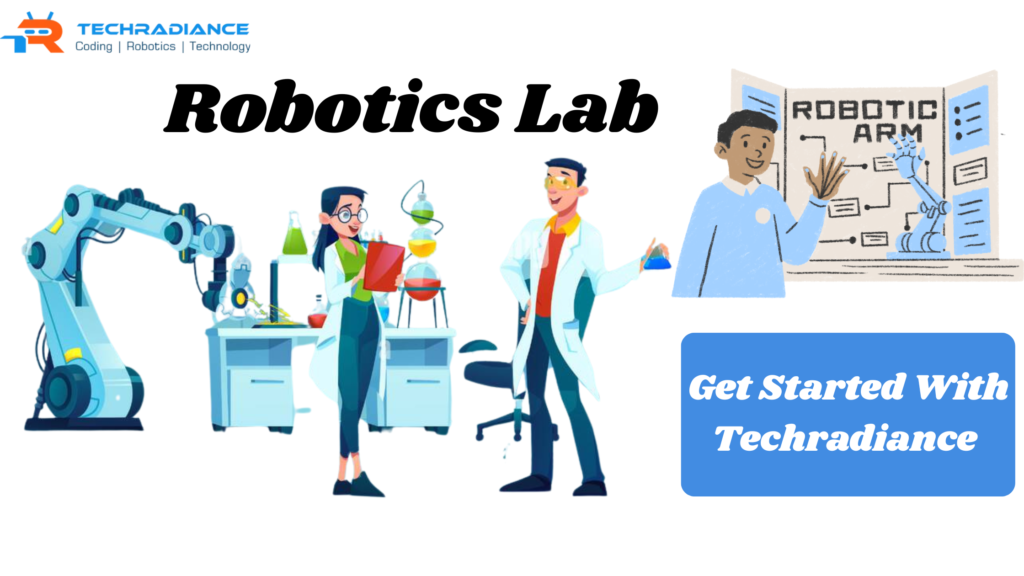
The Robots Lab is an area in the school where students are taught robotics.
In a robotics laboratory students may:
- Create robots
- Learn how to code
- Try their ideas
- Create projects
It’s like a play area to learn about the latest technology.
How Schools in India Are Using Robotics
Presently, STEM Education in India is growing quickly.
A lot of schools:
- The setting up of robotics labs
- Teaching Coding starting in the early years of school
- Conducting competitions
Students learn new skills at an early age.
India is progressing towards smart education and robotics is an important component of that.
Robotics Projects for Students
The best way to learn is when students design something.
Here are a few simple Robotics Projects for Students:
- Line follower robot
- Obstacle-avoiding robot
- Smart car
- Automated lighting system
These projects assist students in understanding real-world issues and solutions.
How to Start Robotics in Schools?
Schools can introduce robotics to their students gradually.
Step 1: Set Up a Robotics Lab
Begin with the basics of equipment and kits.
Step 2: Train Teachers
Teachers must be taught how to lead students.
Step 3: Use Simple Curriculum
Start with simple lessons designed for those who are new to the subject.
Step 4: Encourage Projects
Students can build and test new ideas.
Step 5: Organize Competitions
This inspires students to be better.
What Challenges Do Schools Face?
There are schools that have issues when beginning robotics.
High Cost
A robotics lab will require cash.
Lack of Knowledge
Teachers might require training.
Fear of Technology
Some schools think that robotics is difficult.
With the right assistance, the issues can be easily resolved.
Future Scope of Robotics in Education
The future of Robotics in Education is extremely promising.
More Schools Will Use Robotics
Soon, robotics will be an integral part of every school.
AI + Robotics Learning
Students will be taught artificial intelligence with robotics.
Global Opportunities
Students will compete in international competitions.
More Innovation
Students will come up with innovative ideas and start-ups
Why Schools Should Adopt Robotics Now
If schools are determined to keep up with the times, then they need to change in line with the times.
Robotics can help students:
- Think more clearly
- Learn faster
- Get smarter
It’s not an additional subject. The future of education.
What Schools and Parents Say About Robotics in Education
Many ask, “Why should schools instruct robots?”
Here’s how real teachers, parents and students think of after having used the technology.
“Students Love Coming to School Now”
School Principal, Delhi
“After the introduction of a robotics lab students are more eager to attend school. They are more interested in learning because it’s fun. The use of robotics in education has transformed the way we teach.”
“My Child Started Thinking Creatively”
Parent
“My child would read books. With robotics, now for kids, he can build simple projects with his family at home. I can feel his enthusiasm expanding every day.”
“Learning by Doing Really Works”
Science Teacher
“Earlier, students were finding STEM subjects challenging. Now, thanks to STEM in the classroom through robotics, students can grasp concepts more quickly. Learning through practice really works.”
“Students Are More Confident Now”
School Coordinator
“Students don’t have any fear of experimenting with new ideas anymore. Students can benefit from robotics projects that aid them in their ability to speak, present, and communicate ideas with confidence.”
“Best Decision for Our School”
School Director
“Setting up the robotics lab was among the best choices we made. It has increased students’ engagement, their skills and overall experience.”
Final Thoughts:
Robotics in Education has changed the way students learn.
It helps in learning:
- Fun
- Practical
- Future-ready
With the help of tools such as robotics labs, STEM education in India is growing quickly.
Students aren’t only learning through books nowadays. They are creating, constructing and thinking.
Schools that are embracing robotics today are helping prepare students for the challenges of tomorrow.
Frequently Asked Question
❓ What is the meaning of STEM Education?
STEM education is the process of studying science, technology, engineering and mathematics in an interactive and practical manner.
❓ What is the highest-paid STEM job?
Some of the most lucrative STEM jobs are AI engineer, data scientist, robotics engineer, and software engineer. AI engineers are often among the highest-paid.
❓ What is the meaning of STEM Education?
STEM education involves the study of science, technology, engineering, and mathematics in an engaging and fun way.
❓ What are the 5 examples of Robotics?
Line follower robot, Obstacle avoiding robot, Robotic arm, Delivery robots, Humanoid robots